


Thyroid Function Blood Test (TSH, Free T3, Free T4)
Biomarkers
-
TSH (Thyroid Stimulating Hormone)
Produced by the pituitary gland, TSH tells your thyroid how much hormone to produce
-
Free T3 (Triiodothyronine)
The most active thyroid hormone, which plays a crucial role in regulating your body's energy and metabolism
-
Free T4 (Thyroxine)
The primary hormone produced by the thyroid gland; "Free" T4 is the active form available to your tissues.
Frequently Asked Questions
| QUESTION | ANSWER |
|---|---|
|
Can thyroid problems cause hair loss?
|
Yes. Both an underactive thyroid (hypothyroidism) and an overactive thyroid (hyperthyroidism) can cause diffuse hair thinning across the scalp. The thyroid hormones measured in this panel, TSH, free T3, and free T4, help identify whether a thyroid imbalance may be contributing to your symptoms.
|
|
Is this test suitable if I already have diagnosed thyroid disease?
|
Yes. This test is commonly used to monitor thyroid function and assess how well treatment is working, especially when tracking trends over time.
|
|
Does stress affect thyroid hormones?
|
Chronic stress can indirectly affect thyroid function.
|
|
Can I take this test if I am on thyroid medication?
|
Yes. Thyroid medication, hormone therapy, steroids, and some heart or mental health medications can influence results. Results should always be interpreted by a healthcare professional in the context of current treatments.
|
|
What is considered a “normal” thyroid range?
|
Each biomarker has an established reference range based on healthy populations.Your report will show your personal result alongside these ranges so you can clearly see where you sit.
|
|
Can this test diagnose a thyroid condition?
|
This test provides important biochemical data, but it does not replace a clinical diagnosis. Results should be interpreted alongside symptoms and, where necessary, discussed with a healthcare professional.
|
|
Can pregnancy affect thyroid results?
|
Yes. Pregnancy significantly alters thyroid hormone requirements and reference ranges. Pregnant individuals should always discuss thyroid testing with a healthcare professional.
|
|
Does stress affect thyroid hormones?
|
Chronic stress can indirectly affect thyroid function.
|
|
What is considered a “normal” thyroid range?
|
Each biomarker has an established reference range based on healthy populations. Your report will show your personal result alongside these ranges so you can clearly see where you sit.
|
|
Can medications affect my thyroid results?
|
Yes. Thyroid medication, hormone therapy, steroids, and some heart or mental health medications can influence results. Results should always be interpreted by a healthcare professional in the context of current treatments.
|
Turnaround Time
Turnaround Time
Test Preparation
-
Thyroid Function
Read the instructions carefully: Your kit includes full instructions to ensure the sample is collected correctly the first time.
Prepare your hands: Drink plenty of water beforehand and warm your hands under warm running water for a few minutes to improve blood flow.
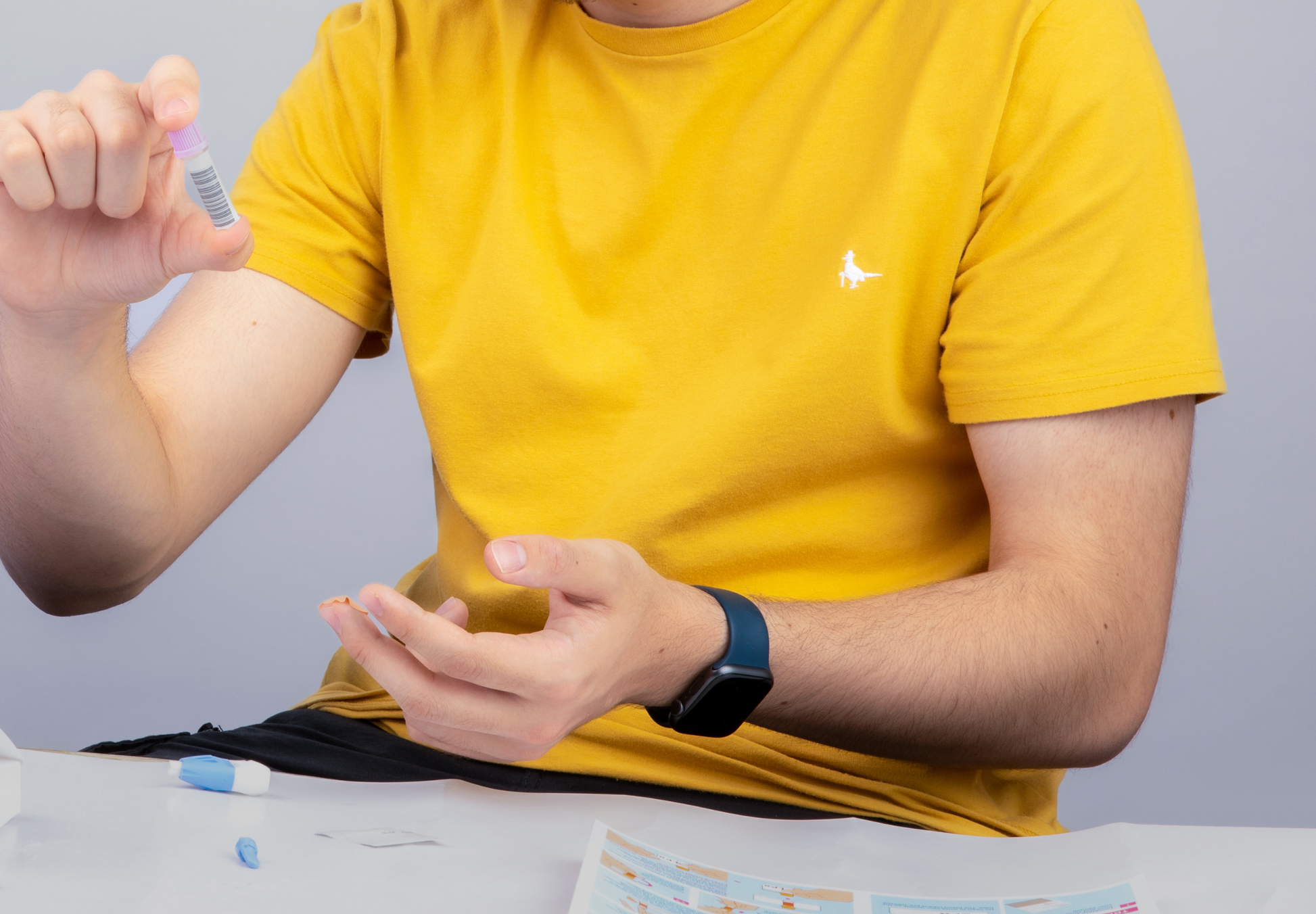
Collect your sample: Fill the collection tube to the indicated top line, approximately 15 drops of blood.
Post your sample promptly: Send your sample on the same day you collect it, before midday, Monday to Thursday.
Use the packaging provided: Place the tube in the supplied pouch, then the cardboard box, and finally into the return envelope.
Important Meal Advice: While strict fasting is not required, you must avoid a high-fat meal for at least 6 hours before taking your blood sample. Fatty meals can cause lipemia, a condition where the blood looks cloudy or milky, which may affect the accuracy of your results.
Symptom Check
-
Hypothyroidism
-
Hyperthyroidism
Result Report
-
Result Report (in-use)
Reports are reviewed by a UK-registered doctor before being sent out. The final report provides a comprehensive breakdown of your biomarkers, displaying your specific levels alongside standard UK reference ranges to show exactly where you fall on the spectrum. Beyond just the raw numbers, the report includes a brief commentary.
 View your results in a clear, easy-to-understand format with charts and reference ranges. If you repeat the same biomarkers with us, your report includes historical comparisons to help track changes, trends, and progress over time.


Every result is reviewed by a UK-registered doctor before it's sent to you. Monitor your thyroid health with this comprehensive profile, which measures the key hormones regulating your metabolism, and give you an insight into your thyroid health and function.This test can be performed at home and sent to the laboratory for professional analysis.
Your thyroid is a small, butterfly-shaped gland that acts as the master control center for your entire metabolism. It produces vital hormones that dictate exactly how your body uses energy, regulates temperature, manages weight, and maintains your mood. When your thyroid is sluggish (hypothyroidism) or overactive (hyperthyroidism), it can manifest as unexplained weight gain or loss, persistent exhaustion, constant feeling of cold or heat, thinning hair, and brain fog.
Standard medical checks often only screen for TSH (Thyroid Stimulating Hormone), which frequently misses the full clinical picture. Our laboratory Thyroid Function Blood Test delivers a comprehensive overview of your hormonal health by measuring the three most critical thyroid markers simultaneously: TSH, Free T3 (FT3), and Free T4 (FT4). By looking at both the stimulating hormone and the active thyroid hormones circulating in your blood, this profile lets you see exactly how well your thyroid gland is performing.
How to complete your thyroid test from home: Monitoring your metabolic health is completely private and straightforward. There is no need to queue at a clinical center or wait weeks for an appointment slot.
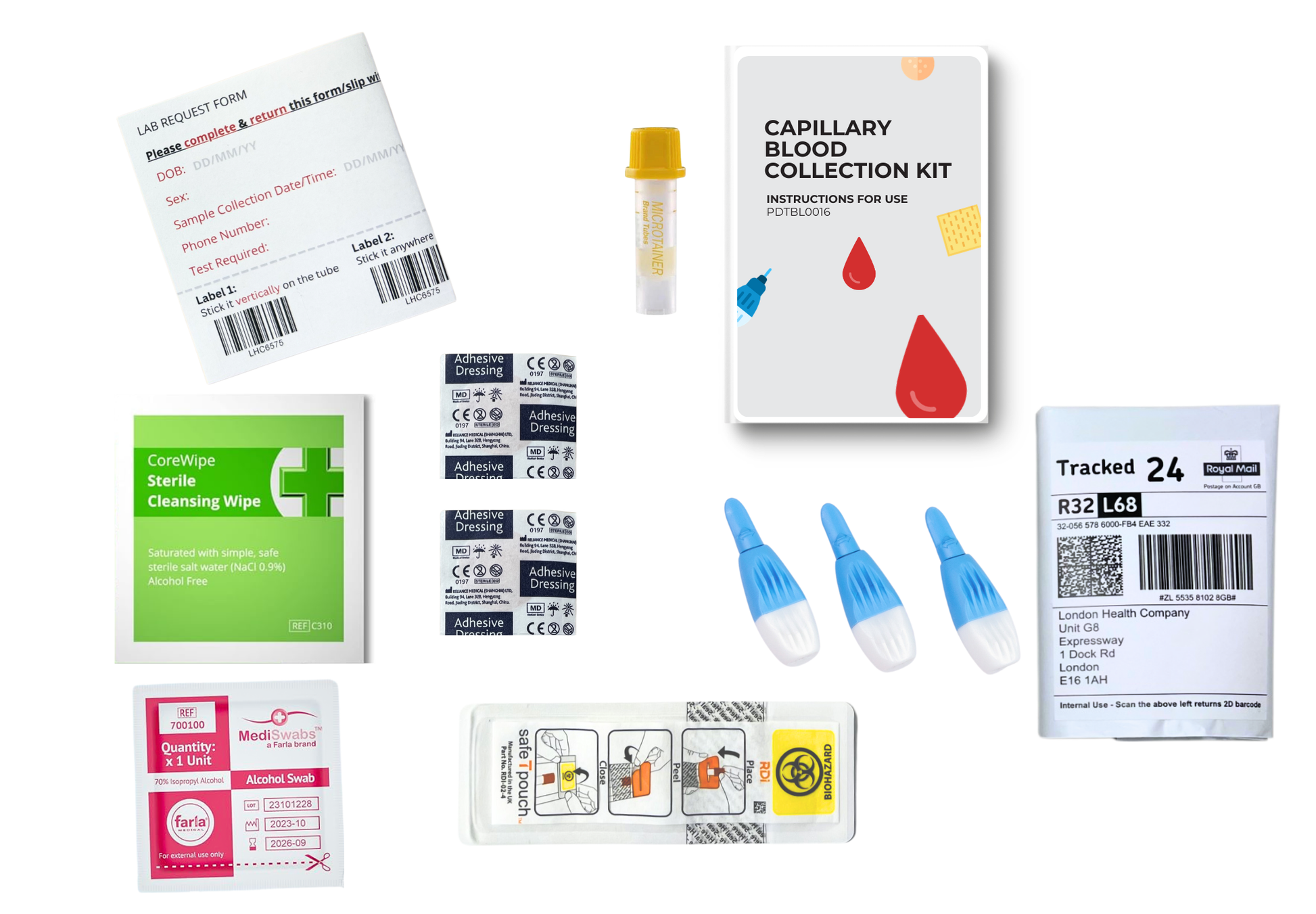
Your discreetly packaged testing kit includes everything you need: sterile finger-prick lancets, sample collection tubes, simple step-by-step instructions, and a prepaid UN3373 priority envelope. Simply collect a few drops of blood first thing in the morning and post it directly back to us using any standard mailbox.
Every sample is handled and processed inside our in-house, CQC-regulated UK laboratory to ensure absolute hospital-grade accuracy. Within 1 to 3 working days of your sample reaching our facility, your final quantitative results will be securely uploaded to your private digital dashboard, featuring clear visual ranges and commentary.
How it works

Order test online

Collect a few drops at home

Return sample to the lab
