


Chlamydia & Gonorrhoea STI/STD Urine Lab Test Kit by PCR
Chlamydia & Gonorrhoea STI/STD Urine Lab Test Kit by PCR
Couldn't load pickup availability
This test is processed by The Doctors Laboratory (TDL), one of the largest independent UKAS-accredited laboratories (9317 and 10199) in the UK, which works in partnership with the NHS to ensure high-quality testing and reliable results.
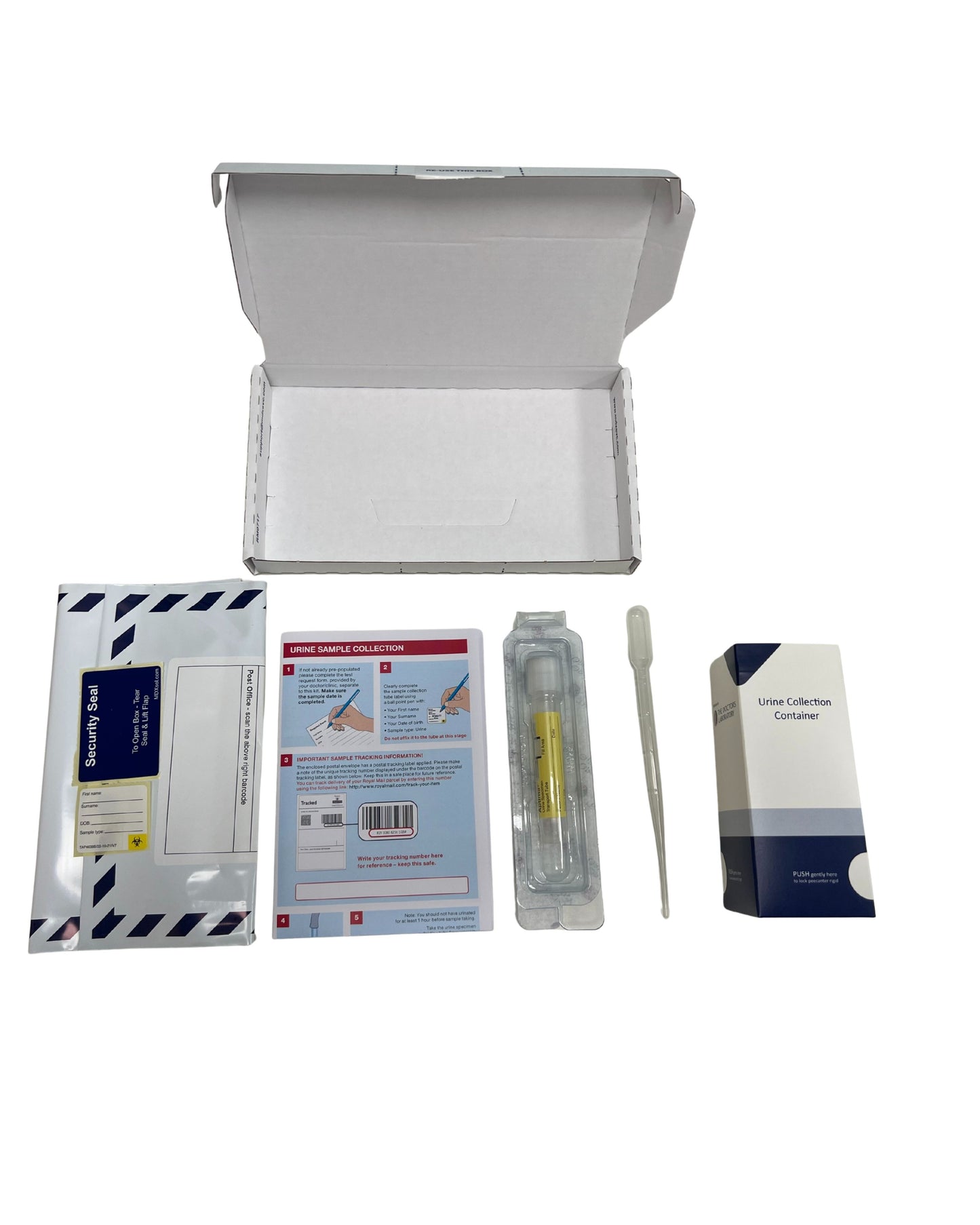
Complete at-home urine STI test kit with prepaid envelope, urine collection cup, urine specimen transport tube, transfer pipette for moving the sample to the tube, instructions for use, sample label, lab request slip, and transport pouch.
Using the appropriate sample type helps ensure accurate results and reduces the risk of false negatives, allowing infections to be identified and treated promptly.
What is Tested
Chlamydia is the most common bacterial sexually transmitted infection in the UK and is caused by the bacterium Chlamydia trachomatis. It is primarily transmitted through unprotected sexual contact and can also be passed from a pregnant woman to her unborn baby. Chlamydia often causes no noticeable symptoms; however, if left untreated, the infection can spread within the body and lead to serious long-term health complications. This test detects small amounts of Chlamydia trachomatis genetic material (DNA) to identify a current, active infection. The test is highly sensitive and capable of detecting even very low levels of bacterial DNA.
Gonorrhoea is a sexually transmitted infection caused by the bacterium Neisseria gonorrhoeae and is transmitted through unprotected sexual contact. This test detects small amounts of Neisseria gonorrhoeae genetic material (DNA) to identify a current, active infection. It is a highly sensitive test capable of detecting even very low levels of bacterial DNA.
Incubation Period
Chlamydia and Gonorrhoea have an incubation period of up to 14 days after exposure. For the most accurate results, this test is best taken at least 14 days after your most recent sexual encounter, when any infection is more likely to be detectable. Testing during the very early stages of infection (within the first 14 days) may not reliably identify chlamydia or gonorrhoea.
Sample Submission & Processing Guidelines
False positives and negatives are uncommon when samples are collected correctly and processed promptly. To minimize the risk of a false negative, it is important to follow the instructions carefully. In particular, avoid urinating for at least 1-2 hours before taking the test to ensure the sample contains sufficient bacteria for accurate detection.
Upon receiving your sample, the lab will send you an email confirmation to let you know it has been checked in. Processing typically takes 24–48 hours from receipt, and your results will be emailed within 3 days. To ensure timely processing and maintain sample integrity, please do not post your sample on a Thursday, Friday or over the weekend as it may be delayed in transit. The lab requires samples to be collected and posted so they arrive within 24 hours to ensure accuracy.
Share


How it works
-
Order kit
Order the kit that you want based on what you want to be tested. We ship all orders placed before 1pm same day.
-
Collect your sample at home
Collect your own sample using a simple finger prick. Everything you need will be included in the kit.
-
Send your sample to the lab
Simply drop in any red letter box. No need to arrange for courier pickup or pay for returns. Remember to register online using the unique sample ID to get your results.
-
Receive results
We will analyse your sample and send you results by email within 24-48 hours. A copy can be sent to your GP/surgery if you wish.
Health & Medical Information Related to our Tests
View all-
The Build vs. Break Index: Understanding the T:...
The T:C ratio is a biological marker of the balance between building up (Anabolic/Testosterone) and breaking down (Catabolic/Cortisol). It serves as a physiological gauge for how well the body is...
The Build vs. Break Index: Understanding the T:...
The T:C ratio is a biological marker of the balance between building up (Anabolic/Testosterone) and breaking down (Catabolic/Cortisol). It serves as a physiological gauge for how well the body is...
-
Understanding Prostatitis: What Recent Research...
Prostatitis is inflammation or infection of the prostate, which can be acute, chronic, or chronic pelvic pain syndrome (CP/CPPS). Symptoms include pelvic pain, urinary changes, and discomfort during urination. Treatment...
Understanding Prostatitis: What Recent Research...
Prostatitis is inflammation or infection of the prostate, which can be acute, chronic, or chronic pelvic pain syndrome (CP/CPPS). Symptoms include pelvic pain, urinary changes, and discomfort during urination. Treatment...
-
Iron Deficiency and Hair Loss in Women: What Do...
Hair loss is a common concern among women, and iron deficiency has long been suspected as a contributing factor. A well-designed systematic review and meta-analysis published in Skin Appendage Disorders examined...
Iron Deficiency and Hair Loss in Women: What Do...
Hair loss is a common concern among women, and iron deficiency has long been suspected as a contributing factor. A well-designed systematic review and meta-analysis published in Skin Appendage Disorders examined...
-

Blood vs. Urine Pregnancy Tests: Why Your Choic...
Discover why clinical blood pregnancy tests offer superior accuracy and sensitivity for early pregnancy dating compared to standard at-home urine tests.
Blood vs. Urine Pregnancy Tests: Why Your Choic...
Discover why clinical blood pregnancy tests offer superior accuracy and sensitivity for early pregnancy dating compared to standard at-home urine tests.
