



Essential Health MOT: 16 Biomarker Laboratory Blood Test
Biomarkers
-
Total Cholesterol
A measure of all the cholesterol in your blood, including both good and bad types. It gives an overall indication of cardiovascular risk but is most meaningful when broken down into its components.
-
LDL (Low-Density Lipoprotein)
Often called bad cholesterol, LDL carries cholesterol to the arteries where it can build up as plaque. High levels increase the risk of heart disease and stroke.
-
HDL (High-Density Lipoprotein)
Known as good cholesterol, HDL carries excess cholesterol away from the arteries and back to the liver for removal. Higher levels are generally protective against heart disease.
-
Triglycerides
A type of fat found in the blood, triglycerides are stored as energy but elevated levels, particularly after eating, are linked to increased cardiovascular risk. Levels rise significantly after fatty or high-carbohydrate meals.
-
Alanine Aminotransferase (ALT)
Normal Range: 7–56 U/L
ALT is an enzyme found primarily in liver cells. Elevated ALT levels may indicate liver damage or inflammation and are considered a sensitive marker of liver health. -
Aspartate Aminotransferase (AST)
Aspartate Aminotransferase (AST)
Normal Range: 8–48 U/L
AST is an enzyme found in the liver as well as the heart, muscles, and other tissues. Elevated AST levels may suggest liver damage but are less specific than ALT because AST is present in multiple organs. -
GGT (Gamma-Glutamyl Transferase)
GGT is an enzyme found primarily in the liver that helps process nutrients and detoxify harmful substances. Elevated GGT levels are most commonly associated with liver stress, excessive alcohol consumption, or bile duct problems. It is often measured alongside other liver markers to give a fuller picture of liver health.
-
Total Protein
Normal Range: 6.0–8.3 g/dL
Total protein measures the combined amount of albumin and other proteins in the blood. Abnormal levels may be associated with liver dysfunction or other underlying health conditions. -
Globulin
Globulins are a group of proteins produced mainly by the liver and immune system. They play a key role in immune function, transporting hormones and nutrients through the blood. Abnormal globulin levels can indicate liver disease, kidney problems, or immune system disorders.
-
Albumin
Normal Range: 3.5–5.5 g/dL
Albumin is a protein produced by the liver that helps maintain fluid balance and transport various substances in the blood. Low albumin levels may indicate liver disease or conditions affecting protein production. -
Urea
A waste product produced when the body breaks down protein, filtered out of the blood by the kidneys. Elevated urea can indicate reduced kidney function or dehydration.
-
Uric Acid
A byproduct of the breakdown of purines, found in certain foods and body tissues. High levels can lead to gout, a painful form of joint inflammation, and are also associated with kidney stones.
-
Creatinine
A waste product from normal muscle activity, removed from the blood by the kidneys. Raised creatinine is a reliable indicator that the kidneys are not filtering efficiently.
-
Calcium
Calcium is the most abundant mineral in the body, with the vast majority stored in the bones and teeth. In the blood, calcium plays a critical role in muscle contraction, nerve signalling, blood clotting, and hormone secretion. A calcium blood test measures the level of calcium circulating in the serum and is used to assess bone health, parathyroid function, and kidney health, as well as to investigate symptoms such as muscle cramps, fatigue, or bone pain.
-
Amylase
An enzyme produced mainly by the pancreas and salivary glands to help digest carbohydrates. Elevated amylase can indicate inflammation or stress affecting the pancreas.
-
CRP (High-Sensitivity C-Reactive Protein)
A protein produced by the liver in response to inflammation anywhere in the body. Chronically elevated levels are associated with increased risk of cardiovascular disease, even when no obvious symptoms are present.
-
Total Bilirubin
Normal Range: 0.3–1.9 mg/dL
Bilirubin is a yellow pigment produced during the normal breakdown of red blood cells. Elevated levels may indicate liver dysfunction or problems with the processing and elimination of bilirubin.
Frequently Asked Questions
| QUESTION | ANSWER |
|---|---|
|
What is the Essential Health MOT?
|
The Essential Health MOT is a comprehensive baseline blood test that measures 16 key biomarkers covering your heart, liver, kidneys, pancreas, and inflammation levels. It is designed to give you a broad biological snapshot of your body's core functions, helping to identify early warning signs before symptoms develop.
|
|
What does the Essential Health MOT test for?
|
The panel covers heart health and cholesterol including total cholesterol, LDL, HDL, and triglycerides; liver function through AST, ALT, GGT, and total bilirubin; kidney and metabolic health via urea, creatinine, and uric acid; inflammation using high-sensitivity CRP; digestive and mineral health through amylase and calcium; and protein levels including albumin, globulin, and total protein.
|
|
What is high-sensitivity CRP and why does it matter?
|
High-sensitivity CRP (hs-CRP) is a marker of low-grade inflammation in the body that standard blood tests often do not include. Chronic low-level inflammation is associated with an increased risk of cardiovascular disease, diabetes, and other long-term conditions, often without producing any noticeable symptoms. Including hs-CRP gives a more complete picture of your cardiovascular and inflammatory risk than cholesterol alone.
|
|
Who should take the Essential Health MOT?
|
This test is suitable for any adult who wants a broad overview of their general health, particularly those with no recent blood test results, anyone with a family history of heart disease, liver or kidney conditions, or those experiencing unexplained fatigue, weight changes, or general unwellness. It is also a useful annual health check for those who simply want peace of mind.
|
|
What happens if a result is outside the normal range?
|
Your report will clearly highlight any out-of-range results with explanatory notes. We recommend discussing these with your GP or a healthcare professional, who can advise on whether further investigation or lifestyle changes are needed. An abnormal result does not necessarily indicate a serious condition, but it is always worth following up.
|
Turnaround Time
Turnaround Time
Test Preparation
-
General Health
Fasting
Fasting is not required for this test, but we recommend avoiding fatty meals for at least 6 hours before collection to prevent lipaemia, where excess fat in the blood can affect sample quality and laboratory analysis. However, some GPs prefer a fasted sample, particularly for triglyceride accuracy. If this applies to you, fast for 10 to 12 hours before collection taking water only. Collecting your sample first thing in the morning before breakfast is the easiest way to meet this requirement.
Hydration
Drink plenty of water in the 1 to 2 hours before collection. Being well hydrated makes blood flow easier and improves sample quality.
Exercise
Avoid strenuous exercise for at least 24 hours before testing. Intense physical activity can temporarily raise liver enzymes, creatinine, and uric acid, which may affect your results.
Alcohol
Avoid alcohol for at least 24 hours before testing, and ideally 48 hours. Alcohol can temporarily elevate liver enzymes including ALT, AST, and GGT, which may produce a misleading result.
Medications and Supplements
Do not stop any prescribed medication before testing without speaking to your doctor first.
Timing
Collect your sample in the morning where possible.
Symptom Check
-
General Health
Heart & Cholesterol: High cholesterol and triglycerides rarely cause symptoms until damage has already occurred, which is why testing is so important. In severe cases, fatty deposits under the skin or around the eyes can appear, but most people have no warning signs before a heart attack or stroke.
Liver: Elevated liver enzymes such as ALT, AST, and GGT can be present without any obvious symptoms in the early stages. When the liver is under significant stress, symptoms may include fatigue, nausea, yellowing of the skin or eyes (jaundice), dark urine, and upper right abdominal discomfort.
Kidney & Metabolism: Raised urea, creatinine, or uric acid can indicate the kidneys are not filtering waste efficiently. Symptoms, when present, include swelling in the legs or ankles, fatigue, reduced urine output, and in the case of high uric acid, sudden joint pain particularly in the big toe, known as gout.
Inflammation (hs-CRP): Low-grade inflammation is largely silent and produces no obvious symptoms, yet chronically elevated hs-CRP is strongly associated with increased cardiovascular and metabolic risk. Generalised fatigue and a sense of unwellness are sometimes reported.
Pancreas (Amylase): Elevated amylase can indicate pancreatic stress or inflammation. Symptoms may include upper abdominal pain that radiates to the back, nausea, and digestive discomfort.
Calcium: Low calcium can cause muscle cramps, tingling in the hands and feet, and fatigue. High calcium is often symptomless but can cause nausea, excessive thirst, frequent urination, and confusion in more severe cases.
Proteins (Albumin, Globulin, Total Protein): Abnormal protein levels can point to liver or kidney dysfunction, nutritional deficiencies, or immune system issues. Symptoms may include unexplained weight loss, swelling, fatigue, and increased susceptibility to infections.
Our most popular baseline screening. Processed in our own CQC-regulated London laboratory for clinical-grade accuracy and 24-48-hour results.
Our Essential Health MOT provides a comprehensive biological "snapshot" of your body’s core functions. By measuring 16 critical biomarkers, this test helps identify early warning signs of disease, monitors organ stress, and evaluates your cardiovascular risk—all through a simple home collection or in-clinic visit.
Why Choose the Essential Health MOT?
Direct-to-Lab Authority: We aren't a reseller. Your sample is analysed in our own UK-based, CQC-regulated lab.
The "Silent" Marker: Includes hs-CRP, a high-sensitivity marker for low-grade inflammation that standard tests often miss.
Complete Organ Overview: Assesses the health of your liver, kidneys, pancreas, and heart in one single panel.
Fast, Private, Professional
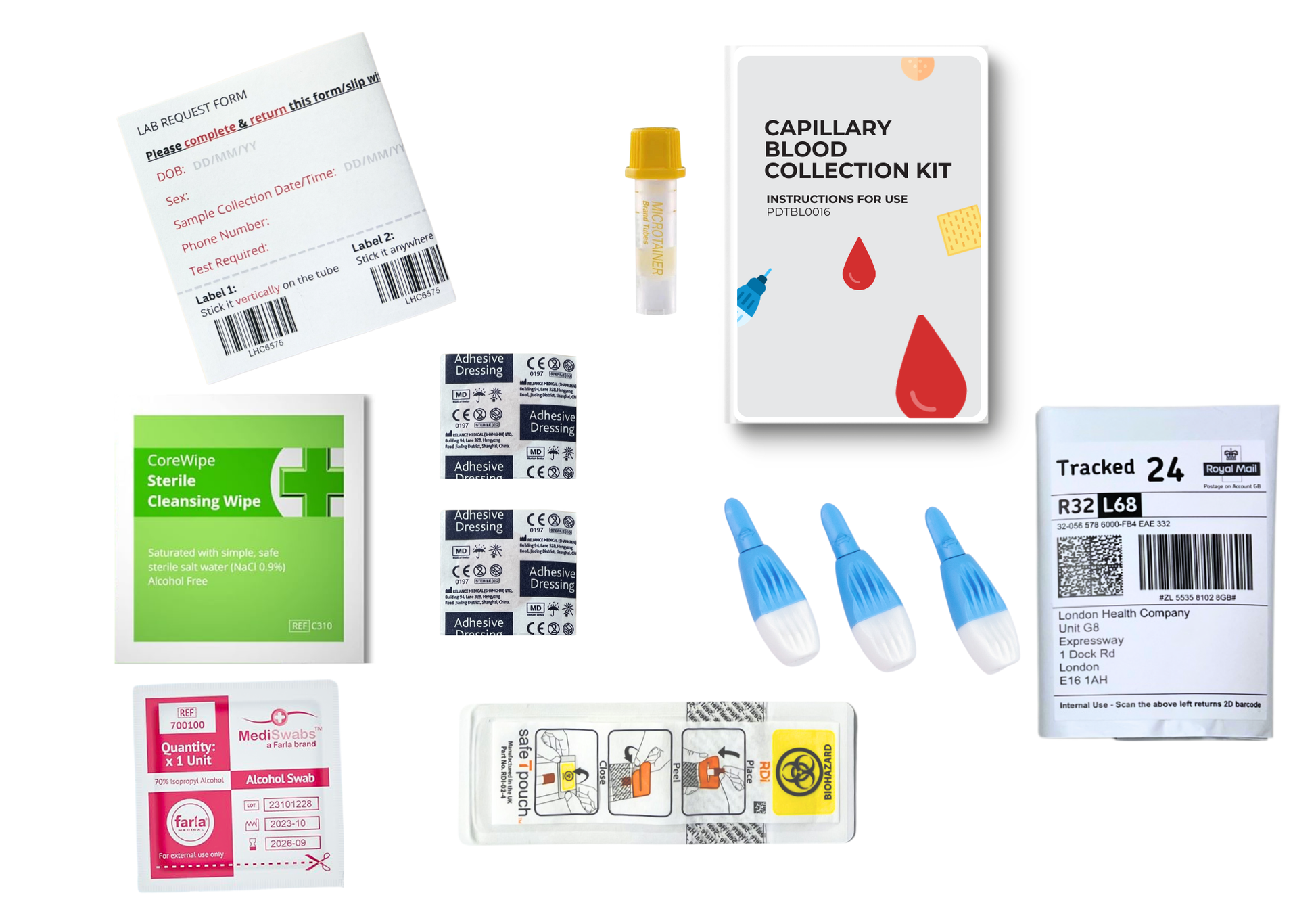
Order: Choose a discreet home finger-prick kit or an in-clinic venous draw.
Sample: Collect your sample and return it via our pre-paid tracked envelope.
Results: Receive your secure digital report within 24–48 hours of our lab receiving your sample.
How it works

Order test online

Collect a few drops at home

Return sample to the lab
