



Ferritin Blood Test Kit – At-Home Iron Stores Test
Biomarkers
-
Ferritin
Measures the amount of iron safely stored in your body's cells (liver, spleen, and muscles) for future use. Because ferritin stores deplete before circulating iron levels drop, this is the single most important marker for catching iron deficiency early.
Frequently Asked Questions
| QUESTION | ANSWER |
|---|---|
|
What is ferritin and what does it do?
|
Ferritin is a protein found in your cells that stores iron and releases it in a controlled way when your body needs it. It serves as the body's iron reserve and is one of the most reliable indicators of how much iron your body has available. Unlike serum iron, which can fluctuate throughout the day, ferritin reflects your longer-term iron stores, making it a more accurate marker of iron status.
|
|
What are the symptoms of low ferritin?
|
Low ferritin symptoms are often gradual and easy to overlook. The most common include persistent fatigue and low energy, weakness, difficulty concentrating, low mood, shortness of breath on exertion, and cold hands and feet. Hair thinning or excessive shedding is also a widely reported symptom, even when haemoglobin levels remain within the normal range.
|
|
What are the symptoms of high ferritin levels?
|
Elevated ferritin does not always cause noticeable symptoms, particularly in the early stages. When symptoms do occur, they may include joint pain, persistent fatigue and abdominal discomfort.
|
|
What causes low ferritin?
|
The most common cause of low ferritin is insufficient dietary iron intake, particularly in those following plant-based diets where iron is less readily absorbed. Blood loss is another major cause, especially in women with heavy periods. Other contributing factors include poor iron absorption due to conditions such as coeliac disease or Crohn's disease, pregnancy, and frequent blood donation. In some cases, low ferritin can occur even when dietary intake appears adequate.
|
|
Is ferritin affected during pregnancy?
|
Yes. Ferritin levels commonly vary during pregnancy and often decrease as pregnancy progresses, particularly in the later trimesters.
|
|
Can a ferritin blood test help diagnose specific conditions?
|
A ferritin blood test helps assess iron stores and may support the diagnosis of conditions such as iron deficiency anaemia, liver disease, or chronic inflammation. Abnormal results are not specific on their own, so further evaluation is usually needed for an accurate diagnosis.
|
|
How can I increase my ferritin levels naturally?
|
Increasing dietary iron intake is the most effective first step. Iron-rich foods include red meat, liver, shellfish, legumes, tofu, dark leafy greens, and fortified cereals. Consuming vitamin C alongside iron-rich foods significantly improves absorption, while avoiding tea, coffee, and calcium-rich foods around mealtimes can help, as these can inhibit iron uptake. If dietary changes are insufficient, an iron supplement may be recommended by a healthcare professional based on your test results.
|
Turnaround Time
Turnaround Time
Test Preparation
-
Ferritin
Fasting is not required for a ferritin test, as levels are not significantly affected by recent meals. However, you should avoid fatty meals at least 6 hours before collecting your sample. If your ferritin test is being taken alongside other iron studies such as serum iron or transferrin saturation, fasting for 8–12 hours beforehand is recommended, as these markers can be influenced by food intake.
The most important consideration is recent illness or infection. Ferritin is an acute-phase protein, meaning levels can rise significantly in response to inflammation or infection, even a mild cold. To avoid a falsely elevated result, wait until you have fully recovered before collecting your sample.
Symptom Check
-
Low Ferritin
Symptoms of Low Ferritin in Women
Women are particularly susceptible to low ferritin, most commonly due to blood loss through menstruation. Symptoms can be subtle at first but often include persistent fatigue and low energy, weakness, shortness of breath on exertion, difficulty concentrating, and low mood. Hair thinning or excessive hair shedding is one of the most commonly reported symptoms in women with low ferritin, even when haemoglobin levels remain normal. Cold hands and feet, headaches, and heart palpitations may also occur as ferritin levels drop further.
Symptoms of Low Ferritin in Men
Although men are generally at lower risk of low ferritin than women, it can still occur, particularly in those with poor dietary intake, gastrointestinal conditions affecting iron absorption, or chronic blood loss from the gut. Symptoms in men mirror those in women and include persistent tiredness, reduced physical endurance, difficulty concentrating, and low mood. Hair loss, which can sometimes be mistaken for male pattern baldness, restless legs syndrome, and an increased susceptibility to illness may also be signs that ferritin levels are lower than optimal. Because symptoms are often gradual and non-specific, low ferritin in men frequently goes undetected without a blood test.
Result Report
-
Result Report (in-use)
Reports are reviewed by a UK-registered doctor before being sent out. The final report provides a comprehensive breakdown of your biomarkers, displaying your specific levels alongside standard UK reference ranges to show exactly where you fall on the spectrum. Beyond just the raw numbers, the report includes a brief commentary.
 View your results in a clear, easy-to-understand format with charts and reference ranges. If you repeat the same biomarkers with us, your report includes historical comparisons to help track changes, trends, and progress over time.


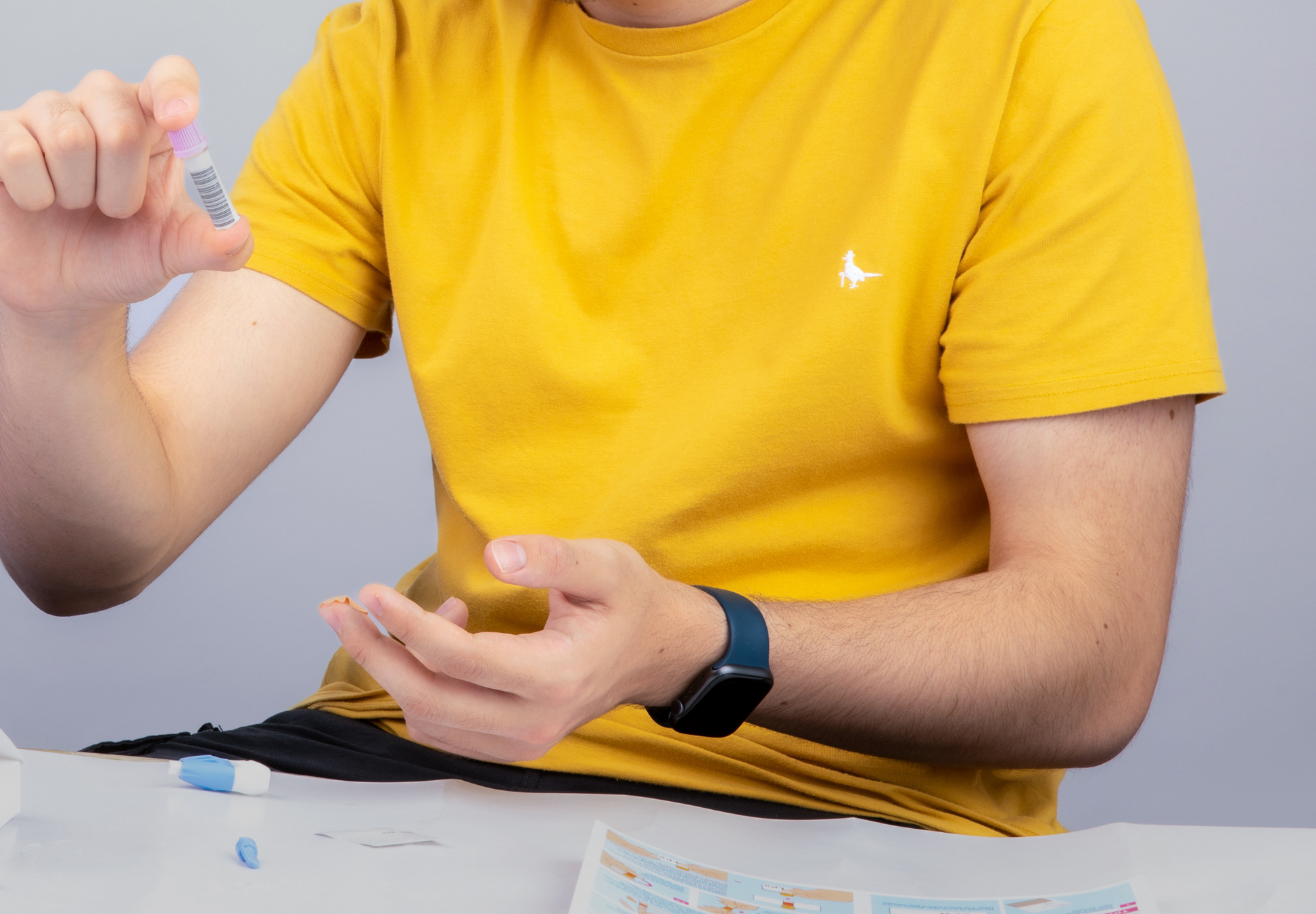
Check your iron stores with an at-home finger-prick blood test. Ferritin is the protein that stores iron in your body, and measuring it is the standard way to assess your iron stores. Collect your sample at home and post it in the prepaid envelope to our own CQC-regulated laboratory in London.
Your report shows your measured ferritin level against laboratory reference ranges, with remarks for any result outside the range. Every result is reviewed by a UK-registered doctor before it is emailed to you.
Why do people check their ferritin?
People commonly check their ferritin if they have symptoms such as tiredness, hair thinning or brittle nails, have heavy periods, follow a vegetarian or vegan diet, or want to monitor iron supplements. These symptoms have many possible causes, so speak with a healthcare professional if they persist.
What is tested?
Serum ferritin, a measure of your body's iron stores.
Need a broader test?
Choose an upgrade above, or compare our Iron Status Profile (ferritin plus iron markers), our Nutrients Blood Test (ferritin, vitamin D and folate) or our Fatigue & Tiredness panel. Tiredness can also be linked to thyroid function, so some people add our Thyroid Function test.
Frequently asked questions
What is a ferritin blood test?
A ferritin blood test measures the amount of ferritin in your blood. Because ferritin stores iron, your level gives an indication of how much iron your body has in reserve.
What is a normal ferritin level?
Reference ranges vary between laboratories and differ for men and women. Your report shows your result against our laboratory's reference range. Ferritin can also rise temporarily during infection or inflammation, so share your report with your GP if your result is outside the range or your symptoms continue.
How should I prepare for the test?
Follow the instructions supplied with your kit. See our guide to preparing for your iron profile and ferritin blood test.
Is my sample sent to another laboratory?
No. London Health Company is the laboratory. Your sample is analysed in-house at our own CQC-regulated laboratory in London. It is not sent to a third-party lab. Most samples are analysed the same day they arrive, and every result is reviewed by a UK-registered doctor before it is emailed to you.
How quickly will I get my results?
Most samples are analysed the same day they reach our laboratory. Your report is emailed to you as a secure PDF.
How it works

Order test online

Collect a few drops at home

Return sample to the lab
