


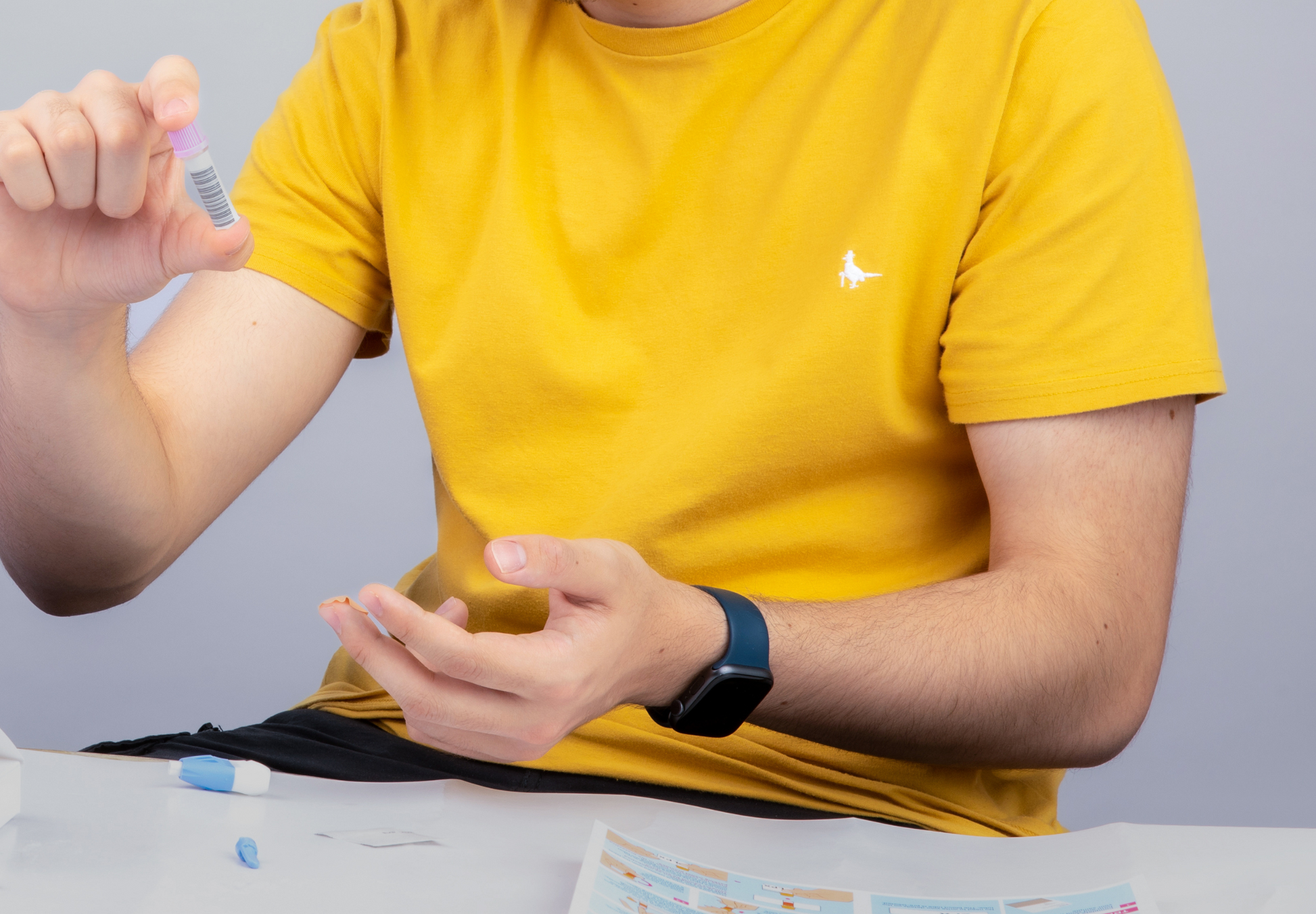
A1c Diabetes Blood Test Kit (HbA1c). Long-Term Blood Sugar Monitoring
Biomarkers
-
HbA1c
The HbA1c test is commonly used to monitor diabetes. The test can provide information about how well a person's blood sugar has been controlled over time and can help identify high blood sugar levels that may lead to complications.
Frequently Asked Questions
| QUESTION | ANSWER |
|---|---|
|
What is HbA1c and what does it measure?
|
HbA1c measures your average blood sugar levels over the past 8–12 weeks by assessing how much glucose is attached to haemoglobin in red blood cells.
|
|
What does my HbA1c result mean?
|
Your results can indicate whether your blood sugar levels are within a healthy range, or whether they suggest prediabetes or diabetes. Regular testing can also be used to monitor existing diabetes over time.
|
|
What are normal HbA1c ranges?
|
Normal: below 42 mmol/mol. Pre-diabetes: 42–47 mmol/mol. Diabetes: 48 mmol/mol or higher.
|
|
Do I need to fast before an HbA1c test?
|
No. Fasting is not required, as the test reflects long-term blood sugar control rather than recent food intake.
|
|
What symptoms might suggest diabetes?
|
Symptoms may include increased thirst, frequent urination, fatigue, unexplained weight loss, blurred vision, slow-healing wounds, and recurrent infections.
|
|
Can anything affect the accuracy of an HbA1c result?
|
Yes. Anaemia, recent blood loss or a transfusion, kidney disease, pregnancy, and some blood disorders can affect results.
|
|
How often should HbA1c be checked?
|
At least once a year if you are at risk of diabetes, or every 3 to 6 months if you have diabetes, depending on your clinical advice.
|
|
Is HbA1c the same as a finger-prick glucose test?
|
No. A finger-prick test shows your blood sugar at a single point in time, while HbA1c reflects your average levels over several months.
|
|
How can I lower my HbA1c?
|
Lifestyle changes such as an improved diet, regular exercise and weight management. Medication may be needed in some cases.
|
Turnaround Time
Turnaround Time
Test Preparation
-
HbA1c
Fasting is not required for an HbA1c test. Unlike many other blood tests, you may eat and drink normally beforehand, as the result reflects your average blood sugar levels over the past 2–3 months rather than at a single point in time, and is therefore not affected by recent meals.
Symptom Check
-
Diabetes Symptom Check
Diabetes symptoms can be mild, gradual, or absent, particularly in the early stages. Common symptoms of diabetes include:
• Increased thirst and a persistent dry mouth
• Passing urine more often, especially at night
• Ongoing tiredness or lack of energy
• Unexplained weight loss
• Blurred or changing vision
• Slow-healing cuts, wounds, or infections
• Recurrent infections, such as thrush or urinary tract infections
• Increased hunger, even after eating
• Tingling, numbness, or burning sensations in the hands or feet
Some people with diabetes experience no noticeable symptoms, which is why blood testing is important for early detection.
If you have one or more of these symptoms, or risk factors such as a family history of diabetes, excess weight, or low physical activity, an HbA1c blood test can help assess your average blood sugar levels and identify diabetes or pre-diabetes early.
Early testing supports timely lifestyle changes or medical treatment and helps reduce the risk of long-term complications.
Result Report
-
Result Report (in-use)
Reports are reviewed by a UK-registered doctor before being sent out. The final report provides a comprehensive breakdown of your biomarkers, displaying your specific levels alongside standard UK reference ranges to show exactly where you fall on the spectrum. Beyond just the raw numbers, the report includes a brief commentary.
 View your results in a clear, easy-to-understand format with charts and reference ranges. If you repeat the same biomarkers with us, your report includes historical comparisons to help track changes, trends, and progress over time.


Monitor your long-term blood sugar from home with our HbA1c (A1c) Home Blood Test Kit. Results are delivered securely as a quantitative PDF report that you can share with your GP. Analysed using HPLC technology in a CQC-regulated laboratory.
Take the guesswork out of your metabolic health.
Whether you are proactively monitoring your wellness, managing pre-diabetes, or simply want to check how your diet and lifestyle are impacting your body, understanding your long-term blood sugar is essential. A standard finger-prick glucose test only tells you what your blood sugar is at that exact second. Our At-Home HbA1c Blood Test Kit provides a much deeper, more reliable clinical picture by measuring your glycated haemoglobin. This gives you an accurate average of your blood sugar levels over the past 90 days.
Taking control of your metabolic health has never been easier. This straightforward at-home kit contains everything you need to safely collect a small, minimally invasive blood sample from the comfort of your living room. There is no need to wait weeks for a GP appointment. Once collected, simply drop your sample into a priority postbox using the prepaid return envelope provided.
Every single sample is processed directly in our in-house, CQC-regulated laboratory. This guarantees that you are receiving the exact same standard of clinical accuracy as a hospital test, with absolute data privacy. Within days, your personalized results will be uploaded to your secure digital dashboard, complete with clear, traffic-light visual ranges and doctor-reviewed commentary to help you understand your 90-day blood sugar baseline.
If you would like a copy of your chromatogram graph to share with your clinician, we can provide this on request. Please email info@lhclab.co.uk.
CQC-Regulated Laboratory
For reassurance and quality assurance, LHC Lab is regulated by the Care Quality Commission (CQC), the same regulator responsible for monitoring NHS hospitals and clinics.
How it works

Order test online

Collect a few drops at home

Return sample to the lab
