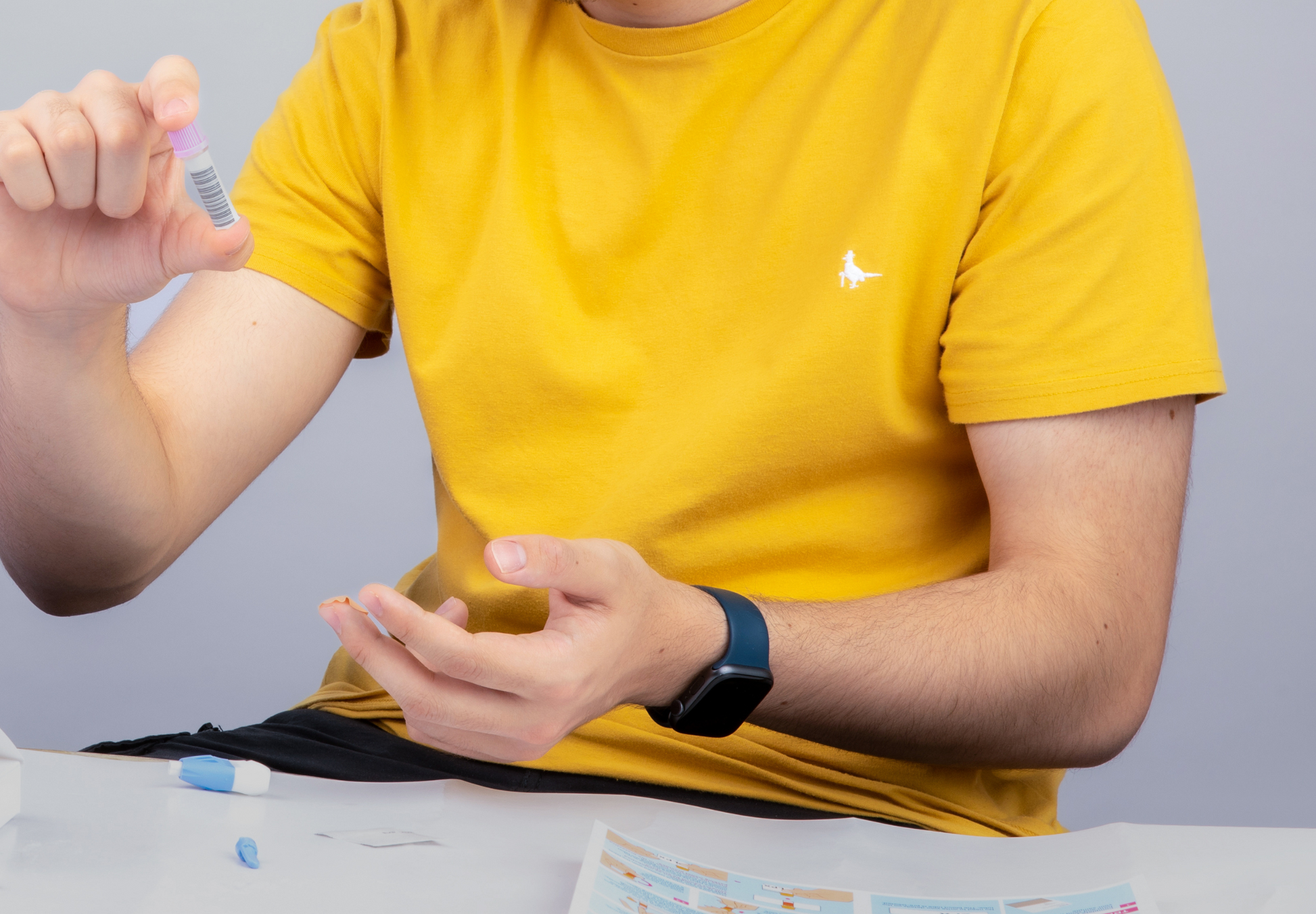
cholesterol at home complete blood collection kit components
tube labelled vertically

Cholesterol Blood Test kit (HDL, LDL, Triglycerides & Total Cholesterol)

Regular price £28.00
Sale price £28.00 Regular price
Tax included.
Monitor your hearth health, with this cholesterol/ lipid profile test, that can be performed at home and sent to the lab for analysis. The lab report will show your values of Total Cholesterol, HDL Cholesterol, LDL Cholesterol and Triglycerides, as well as the normal value ranges of each. Check your lipid profile and get an insight into your heart health and risk of cardiovascular disease at a very competitive price.
4 Biomarkers
Turnaround Time
FAQs
Test Preparation
Symptom Check
Result Report

Biomarkers

  1. Total Cholesterol

    A measure of all the cholesterol in your blood, including both good and bad types. It gives an overall indication of cardiovascular risk but is most meaningful when broken down into its components.

  2. LDL (Low-Density Lipoprotein)

    Often called bad cholesterol, LDL carries cholesterol to the arteries where it can build up as plaque. High levels increase the risk of heart disease and stroke.

  3. HDL (High-Density Lipoprotein)

    Known as good cholesterol, HDL carries excess cholesterol away from the arteries and back to the liver for removal. Higher levels are generally protective against heart disease.

  4. Triglycerides

    A type of fat found in the blood, triglycerides are stored as energy but elevated levels, particularly after eating, are linked to increased cardiovascular risk. Levels rise significantly after fatty or high-carbohydrate meals.

Frequently Asked Questions

QUESTION ANSWER
QWhy are there different cholesterol results?
ACholesterol is measured as HDL (“good”), LDL (“bad”), total cholesterol, and triglycerides. HDL removes cholesterol, while LDL can build up in arteries.
QWhat is the difference between total cholesterol and LDL/HDL?
ATotal cholesterol is all blood cholesterol combined. LDL (“bad”) forms plaque, whereas HDL (“good”) removes cholesterol from the blood.
QWhat do high triglycerides indicate?
AHigh triglycerides increase heart disease risk and, in extreme cases, cause pancreatitis. Levels may rise from diet, obesity, alcohol, or uncontrolled diabetes.
QDoes high cholesterol cause any symptoms?
AMost people don’t notice symptoms. Rarely, complications include chest pain, abdominal pain, or yellow fatty deposits known as xanthomas.
QHow often should adults check their cholesterol?
AAdults are advised to test every 4–6 years, and more often if they have high blood pressure, diabetes, or a family history of heart disease.
QWhat tests are included in a cholesterol check?
AA full test measures total cholesterol, LDL, HDL, and triglycerides for a complete view of heart health.
QWhat lifestyle changes help lower cholesterol?
AEat a heart-healthy diet, exercise regularly, and maintain a healthy weight. These steps improve LDL, HDL, and triglycerides without medication.
QIf my cholesterol is high, will I need medication?
ADoctors calculate a QRisk score to estimate your 10-year heart attack or stroke risk. Medication is advised if your QRisk is greater than 10%; otherwise, lifestyle changes are implemented first.
QCan medications lower cholesterol?
AYes. Statins and other medications reduce LDL and cardiovascular risk, especially when lifestyle changes aren’t enough.
QWhy are my triglyceride results different between two tests?
AIt is completely normal to see variation between two triglyceride readings, and the most common reason is the difference between a fasted and a non-fasted sample. Triglycerides rise significantly after eating, particularly following a meal high in fat or carbohydrates, and can remain elevated for several hours. If one test was taken after fasting and another after eating, the results will not be directly comparable. For consistent and meaningful readings, always take your sample under the same conditions, ideally fasted, each time you test.
Q Should I fast before a triglyceride test?
AFor the most accurate result, we recommend fasting for 10 to 12 hours before your test, taking water only. A fasted sample reflects your baseline triglyceride level rather than a temporary post-meal spike, making it far more useful for assessing cardiovascular risk and monitoring changes over time. If you are unable to fast, your result can still be informative, but it is important to note on your lab request slip that the sample was non-fasted so your result is interpreted in the right context.
QCan I fast overnight before my lipid profile test?
AYes, overnight fasting is the easiest and most practical way to meet the 10 to 12 hour fasting requirement. Simply stop eating after your evening meal, drink only water, and take your sample first thing in the morning before breakfast. This way the fast fits naturally around your routine without any disruption to your day.

Turnaround Time

Turnaround Time

Once your sample is collected and posted, it is processed in our laboratory with a typical turnaround time of 1-3 days from the moment the lab receives the kit.

Test Preparation

  • Lipid Profile

    We recommend fasting for 10 to 12 hours before your test, taking water only, as this reflects your baseline triglyceride level rather than a temporary post-meal spike. Some GPs do not require fasting; however, avoid fatty meals for at least 6 hours before collection. High-fat foods can cause lipaemia, a condition where excess fat particles enter the bloodstream, making the sample appear cloudy or milky. This cloudiness can interfere with the laboratory's optical analysis equipment, producing unreliable results or causing the sample to be rejected entirely, requiring you to repeat the test.

    If you have previously been told you have high triglycerides, or your doctor has specifically requested a fasting lipid profile, you should fast for 10–12 hours before collection, taking only water during this period.

Symptom Check

  • High Cholesterol Symptoms

    Most people have no symptoms, so routine blood testing is essential. Rare warning signs include chest pain, fatigue (heart disease), severe abdominal pain (pancreatitis), or yellowish skin deposits (xanthomas). Lifestyle changes and medication can reduce long-term risks even if you feel well.

Result Report

  • Result Report (in-use)

    The final report provides a comprehensive breakdown of your biomarkers, displaying your specific levels alongside standard UK reference ranges to show exactly where you fall on the spectrum. Beyond just the raw numbers, the report includes a brief commentary.
    Result Report (in-use)
    Result Report (in-use)
    View your results in a clear, easy-to-understand format with charts and reference ranges. If you repeat the same biomarkers with us, your report includes historical comparisons to help track changes, trends, and progress over time.

Private Cholesterol & Lipid Profile Blood Test Kit UK | Laboratory Heart Health Test

Protect your heart with our affordable, CQC-laboratory-tested lipid profile blood test kit. Designed for proactive adults, individuals on statins, or those with a family history of cardiovascular disease, this heart health panel aligns with NHS and NICE guidance to deliver gold-standard monitoring.

Skip the clinic and get a quantitative lab report mapping your Total Cholesterol, HDL Cholesterol, LDL Cholesterol, and Triglycerides sent securely to your email within 24-48 hours of lab receipt. The report is fully quantitative, containing actual figures alongside clear remarks for any results falling outside normal ranges.

test requirements


Who Should Test Their Cholesterol & Lipid Profile?

This test is suitable for adults who want a clearer understanding of their cholesterol levels, including those with a family history of heart disease, those interested in cholesterol monitoring while on statins, or anyone seeking objective data as part of a proactive approach to long-term cardiovascular health.


Biomarkers Tested in This Lipid Profile

Total Cholesterol:
Measures the overall quantity of cholesterol circulating in your blood to establish your core risk baseline.
HDL Cholesterol ("Good" Cholesterol):
High-Density Lipoprotein helps sweep excess cholesterol away from your arteries and back to the liver for safe clearance.
LDL Cholesterol ("Bad" Cholesterol):
Low-Density Lipoprotein can accumulate on artery walls, leading to plaque formation and higher cardiovascular risk.
Triglycerides:
The main form of fat stored in the body. Elevated levels combined with high LDL significantly increase cardiovascular risk.

How to Test Your Cholesterol Levels at Home

  1. Order Your Test Kit: Receive your private cholesterol testing kit at home with fast delivery.
  2. Collect Your Sample: Take a simple finger-prick blood sample first thing in the morning after fasting.
  3. Post to Our UK Lab: Mail your sample directly back to our CQC-regulated UK laboratory using the prepaid return packet.
  4. Receive Digital Results: Within 24 to 48 hours of receipt, a clear quantitative report with remarks will be sent securely to your email.

Frequently Asked Questions

Do I need to fast before a lipid profile blood test?

Yes, fasting for 8 to 12 hours (consuming only water) before taking your sample is required for an accurate lipid profile. Fasting ensures precise measurement of triglycerides and calculated LDL, as recent meals temporarily alter blood fat levels.

Can I take this test if I am on statins?

Yes. This panel is ideal for cholesterol monitoring while on statins to check how effectively your treatment is managing your lipid levels.

What is the difference between HDL and LDL cholesterol?

HDL Cholesterol removes excess fats from your bloodstream, while LDL cholesterol can deposit along artery walls if elevated.

How quickly will I receive my cholesterol test results?

Once your sample arrives at our CQC-regulated UK laboratory, your results will be reviewed by a doctor and emailed to you within 24 to 48 hours.


How it works

Order test online

Collect a few drops at home

Return sample to the lab

Fast resutls via dashboard & email